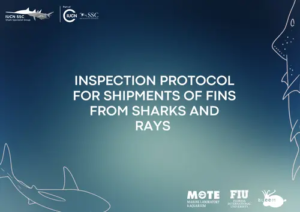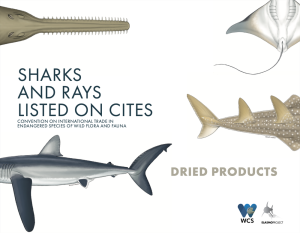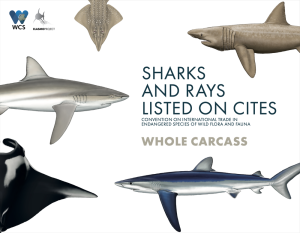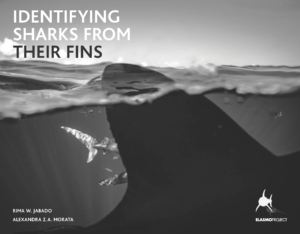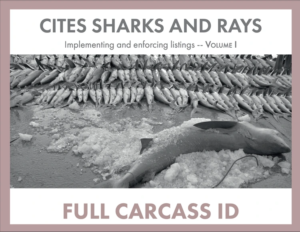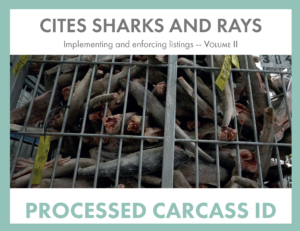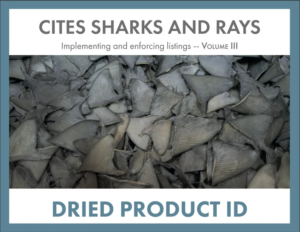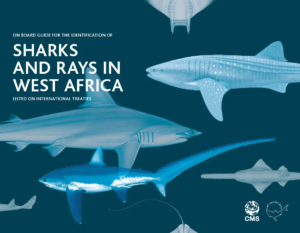
Visual identification is a cost-effective and practical way to improve data collection on sharks and rays at landing sites and fish markets, and to quickly assess whether shipments of shark and ray products require documentation (for example, permits under the Convention on International Trade in Endangered Species of Wild Flora and Fauna [CITES]).
The identification guides below were developed to support fisheries and enforcement officials, as well as other stakeholders (including divers), in visually identifying sharks and rays in a range of forms — from whole animals and carcasses at landing sites to processed products and derivatives such as fins and gill plates. They have been created in collaboration with a wide range of organisations and colleagues from around the world.
These guides are freely available online to support improved data collection, enforcement, and conservation efforts. Many are available in multiple languages, including Arabic, French, Spanish, Portuguese, Bahasa Indonesia, and Chinese, with additional materials accessible via citessharks.org.
These tools are used for:
• Fisheries monitoring
• Enforcement and compliance
• Training and capacity building
• Research and education